There are words on the page, but I can’t actually read any of them. My legs tremble and I sway softly in the rocking chair, attempting to soothe myself. My tiny hands are moist with fear, gripping the edges of the book.
A thunder clap breaks the silence, the smell of desert rain flooding my bedroom as a storm comes in. I don’t even flinch because my nervous system is already activated beyond its capacity. Fight-flight has become a state of being. The chair rocks and I slip away, into the shadows. I grow small, taking up almost no space at all. Finally, peace. I have willed myself into non-existence once again. I am seven years old and this is what it’s like to visit my father’s home.
Tomorrow at breakfast, it will be as if nothing happened. We will eat toaster waffles and talk as if everything is normal, despite the ripples of rage still fresh and dripping from the walls and windows. The detritus of last night’s maelstrom, the broken glass and echoed screams, are already in the garbage, hidden from view.
As many who experience trauma at a young age, I repressed my fear and disassociated from my body to survive. And I have spent the majority of my adult life retrieving the pieces of myself, reclaiming them and calling them home, holding space, compassion, and grace for my inner child. Reclaiming myself has been a long journey, not linear nor simple. Just when I think I have uncovered the deepest chasm and shone a gentle light into it, another layer reveals itself. And so into the cauldron I plunge once again to see what remnants of myself need collecting, smoothing over, and integrating back into the whole.
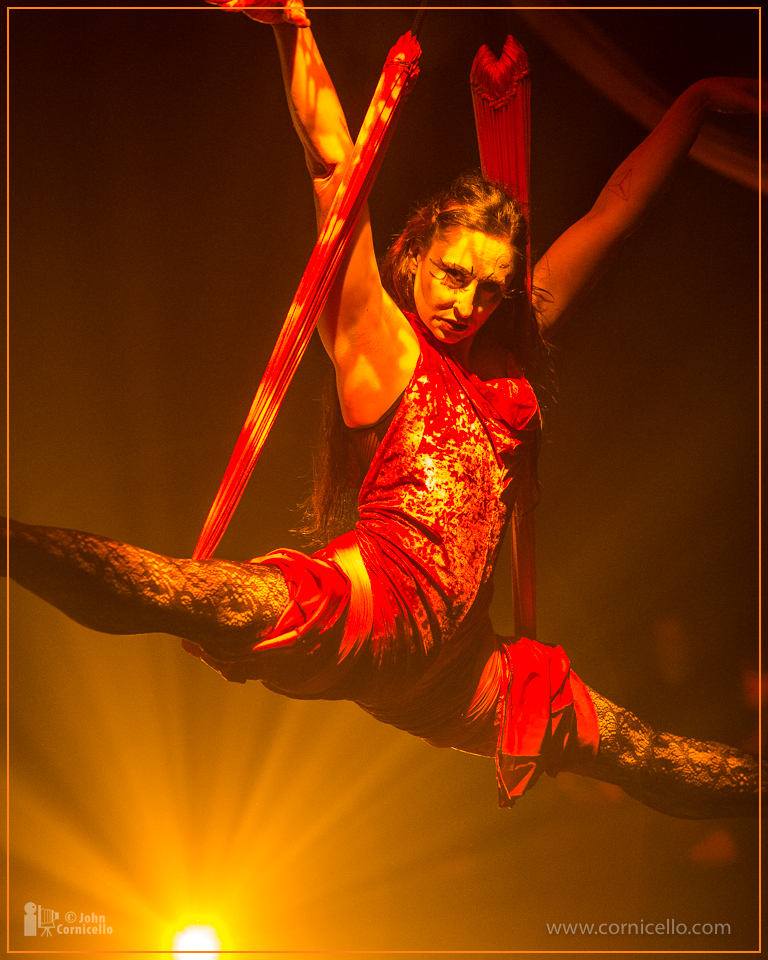
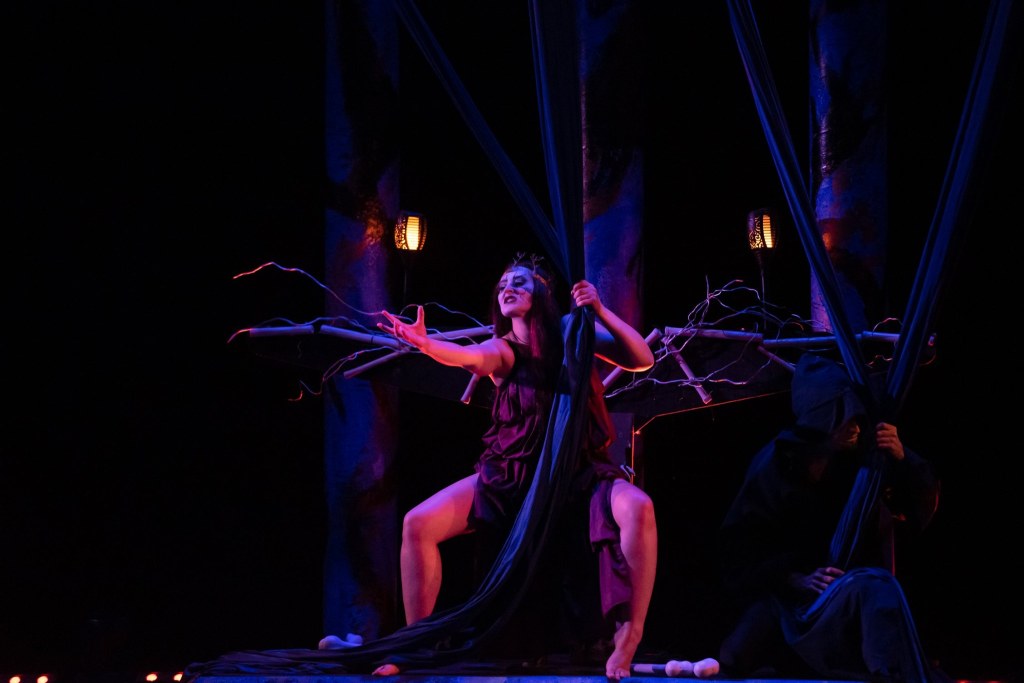
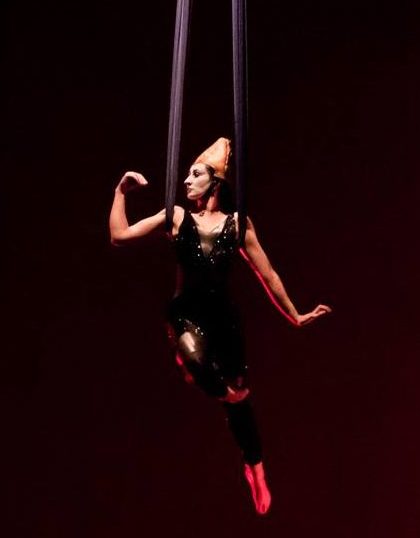
Me performing as Erichtho, Elizabeth Bathory, and Ereshkigal in Cabiri performances 2014-2019. Photos (l to r) by David Rose, John Cornicello, and Marcia Davis.
In 1999 I co-founded a ritual theatre performance troupe called The Cabiri and began creating acrobatic theatre productions based on folklore and mythology. Stepping into darkness on my own terms and embodying stories like Inanna’s descent to the underworld where she encounters Ereshkigal, Queen of the Great Below, was empowering and gave context to the struggles of my childhood.
Photo of me as Kumarbi from the Hittite tale of Tarhun, the lightning god by Bogdan Darev.
In the past two decades, I have walked in the sandals of Ereshkigal and Inanna in performance. I have felt, embodied, and expressed the fear, the longing, the hunger, the hopelessness, and the transformation and renewal of these ancient goddesses. Through the container of sacred time and sacred space created onstage and within The Cabiri, the parts of me that hid in shadow for so long started to feel seen, heard, felt, and safe to emerge and integrate into the wholeness of my being. I have learned how to claim my Place in my life, standing on the perimeter of the Circle gazing outward as guardian.
In my vulnerability lies my power. In my purity and clarity of purpose may I shine the most brightly, and in the darkest shadows have I obtained the greatest wisdom. Each time I have faced grief, loss, and trauma in my adult life, I have returned to the shadows where the most profound wisdom resides – into the arms of the Dark Mother.
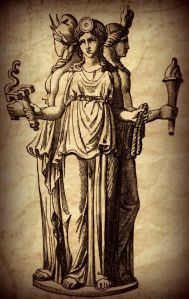
She who stirs the cauldron of the Universe, She through whose womb we die and are reborn, She who holds the keys to facing our darkest fears, She who unlocks the torchlit passages we will tread when we die, She who holds the medicine that holds the power to heal or harm, She who presides over the crossroads, She who ushers us fearlessly into the night, She into whose arms we fall when we draw our last breath.
I am the darkest, roughest threads in the tapestry. I am the gilded, delicate threads that glimmer in the sunlight. I am the entirety of my story. For, in the words of Andrew Chumbley, “one who is illuminated by the darkest shadow will shine with the brightest light.”
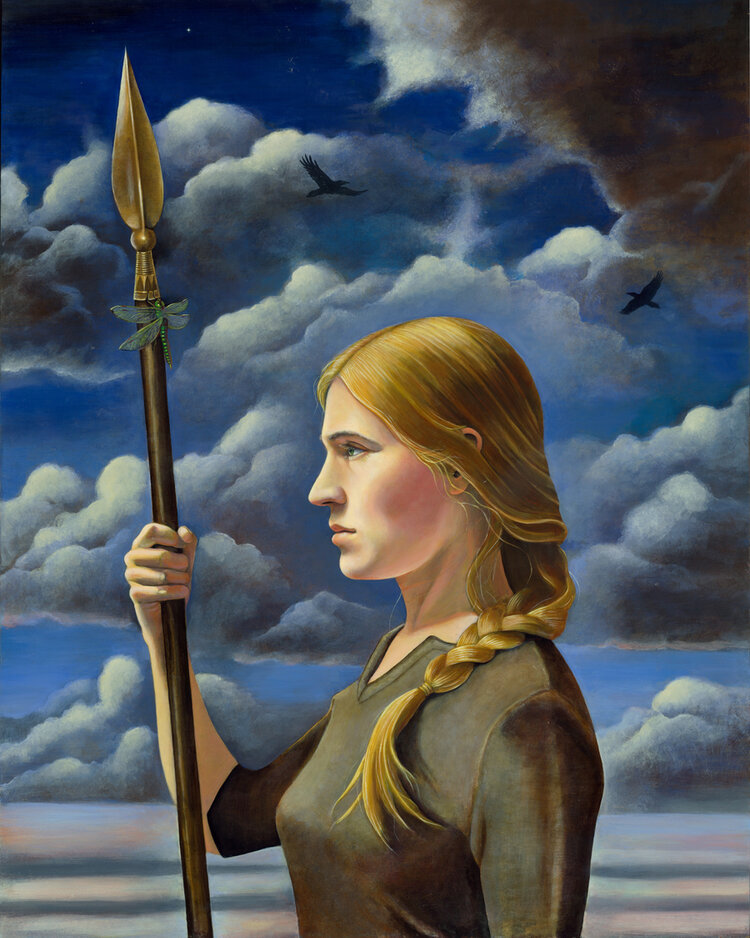
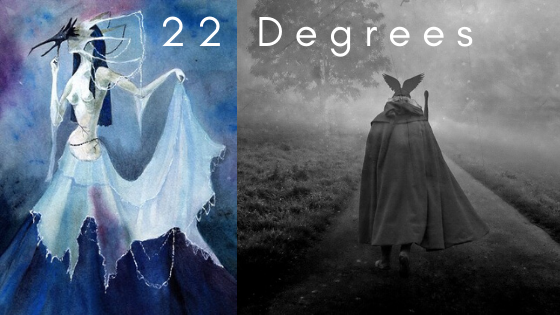
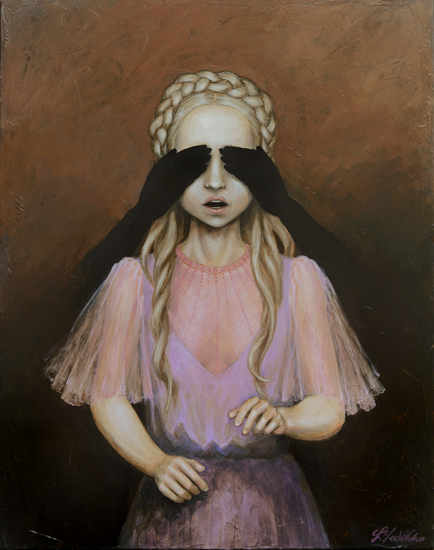
A creative exploration of the recent Saturn-Pluto conjunction at 22 degrees Capricorn, referencing past Saturn-Pluto alignments that have coincided with other major world events and drawing directly on the archetypal imagery and ideas in Richard Tarnas’ transformative and thought provoking text “Cosmos and Psyche.” I have taken generous creative liberties with the planets and how they are depicted and not everyone will agree with my characterizations. All of the quotes below that reference Tarnas are from the “Cosmos and Psyche” text and are not my original work. Cover images: “Dark Goddess” by Laura “Pelick” Siadak and “The Messenger” by h.kopp-delaney.
They stand shoulder to shoulder in the house of Capricornus, their fine black capes fluttering in the wind. It has been decades since they have been this close, 38 years to be precise. They gaze out over the Earth and observe much unrest. Humans are finding ways to divide themselves again. Tension and the potential for dark chaos is growing each day. Saturn, her cold blue lips and pale, wrinkled skin gleaming in the waxing light of the Moon feels a sense of satisfaction as the limitations grow and build among humankind, like great walls delineating boundaries, separating wrong from right, dividing people and determining endings. Many are confined against their will, some held for no particular cause or reason or action. She breathes deeply into the tightening, constricting, and ever-growing discipline being foisted upon the humans below. “This is my essence embodied. The endings are becoming clearer now. The limitations are falling into place.”
Pluto, his jet black tresses nearly invisibly blending with his onyx skin, takes her hand. “What dark chaos shall we bring them this time, my dear? I have missed you.” He can sense the creatures that inhabit the darkest crevices of the mind and imagination taking hold, further sowing unrest, doubt, confusion, and anger among the Earth’s human inhabitants. The rise of othering among humans has grown in recent years. Overt acts of racism, xenophobia, and hatred have been given more audience and more mainstream approval under recent leadership. The flames of the Underworld have been stoked and holy fire burns within so many people’s eyes. Some grasp for their holy books. Others look to weapons. Many feel lost, drifting in a sense of hopelessness that seems to know no bounds. It is a dark time among humankind, indeed. Pluto understands the darkness and knows that it is part of the cosmic ebb and flow.
The last time these two powerful forces aligned across the solar system from one another, nearly 2 decades ago, the world witnessed tragedy, death, loss of lives, and unfathomable terror in the form of buildings smoldering in the middle of a major metropolitan city. Holy fire inspired these terrorist actions by religious extremists, fueled by the alignment of Pluto and Saturn along the Sagittarius-Gemini axis. And yet somehow, even in the face of such trauma, a select few called forth “… intense focus and discipline, with minimal resources, and exceptional courage and acts of will in the face of extreme danger, hardship, death, and moral darkness.” (Tarnas, p. 257) Would the current alignment yield the same courageous stepping forward to stand against the dark, raging waters of chaos? Only time would tell.
Saturn spoke first, breaking the long silence that had elapsed between them. “A great many fingers have hovered near the triggers that could unleash another Great War here upon the Earth. This brings me a great sense of unease.” She paused and reflected, “…naming the inhuman cruelty and violence, the bestial evil, the holocaustal and nuclear horror, the ethnic cleansing, the predatory imperialism.” (Tarnas, p. 260) A sense of sadness came over her, for Her boundaries, delineations, and limitations do not exist in order to bring such suffering to the souls of the Universe.
Pluto raised His arms to the sky, conjuring a great storm. “Yet in order to expose the underlying cosmic truths, we must break down, destroy, and rip apart what exists in order to make way for something new. Whether it be by war, violence, civil uprising, plague, or storm. The sentient beings of the Earth must be disrupted, disturbed, and thrown into darkness in order to emerge anew.” He remembered fondly the millions of acres of land burning in the southern hemisphere as She drew nearer to him mere months ago. Pluto fears nothing.
“I don’t think I can stomach something so violent right now, Pluto. Did you say something about a plague? Remember when we danced together nearly a century ago? 1915, was it?” Saturn’s memories span eons and sometimes the details are difficult to recall.
“Yesssss,” he hissed. “The Earth is definitely ripe for a plague. It’s been far too long since humankind has had to face its fears of the microscopic realm and all the hidden, filthy, disgusting things it can do to their bodies.” Pluto chuckled and drew a pouch from the folds of his cloak. The globe spun below them and He sprinkled the first bit of virus on to one of the most populace realms of the Earth. He knew in his heart that the price this virus would exact would not be limited to lives. It would amplify “… the characteristic Saturn-Pluto motifs of judgment and guilt, cruel punishment, claustrophobic bureaucracy and totalitarian confinement…” (Tarnas, p. 243)
Homes would come to feel like prisons to some under months of mandatory confinement. Many would feel the need to place blame, turning to race and national origin in order to incite race-based violence against their fellow humans. Some would call the government’s response an attempt to suppress the rights of the people, denying and defying scientific evidence. And there would be so much loss. There would of course be loss of life, but also livelihood, fortunes, and dreams for the future would drown in the waters of the novel coronavirus.
The celestial dance continued, and Saturn and Pluto slowly began to drift apart once again. Upon Earth, humankind sits captivated by fear, uncertainty, and disbelief of the new reality cast upon our lives like a sudden shadow we never saw coming. We hold our breaths. Some of us are called to action and heroes step out of the shadows to face the chaos. Most of them wear surgical scrubs and masks, the front line of this unimaginable war. Yet others openly question or defy the warnings, raging into the streets, government buildings, public places screaming about their rights. It is a divisive time. It is a deeply uncertain time. The only certainty is that we will emerge from this time changed.
68 days since we locked the doors of our beautiful cultural arts studio Arcadia due to a COVID-19 outbreak here in Washington State, where we will forever bear the crown of the first state in the US to have multiple outbreaks and cases of coronavirus.
Mid-March seems so far away now. I remember those early days of the viral outbreak and reminisce. I remember our diligent doorknob and light switch sanitizing, and our social distancing in aerial classes, before we had to close our doors for who knows how long under an order by our governor. March events were optimistically moved to April and May. The worldwide number of cases was still below 1 million. Most of us had no idea what the near future would hold. Every single one of us has been impacted in our own profound way. Very few of us will emerge from this time unchanged.
Me performing in Denver, CO (2013)
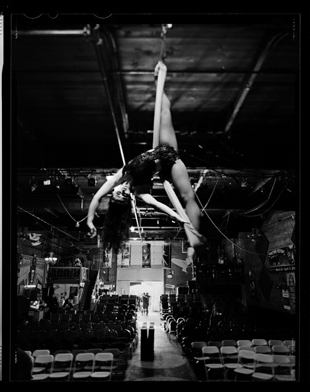
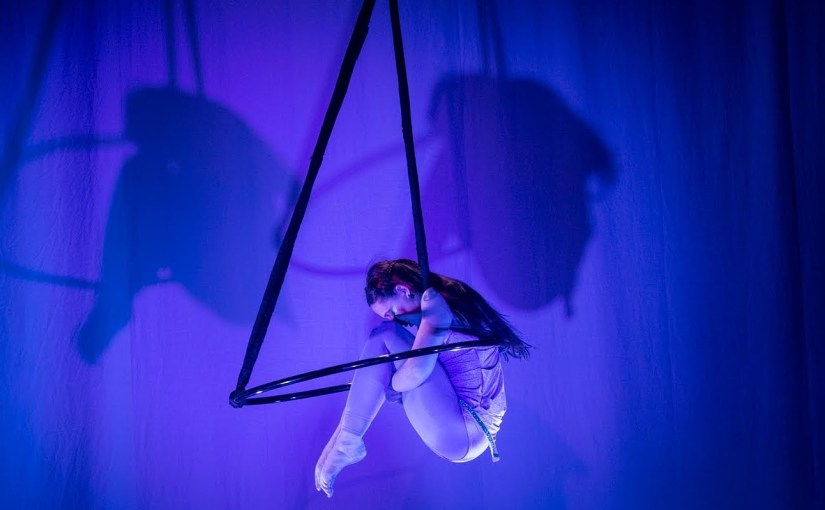
The primary artistic discipline I have practiced, taught, and performed for the past nearly 20 years is aerial dance. This art form incorporates aspects of improvisation, ground-based dance, and aerial acrobatics, and provides a perfect medium for storytelling and artistic expression. Aerial dance necessitates the use of an aerial apparatus such as a fabric, a trapeze, a hoop, or a harness in order to facilitate connection between earth and sky. Our apparatus becomes our dance partner.
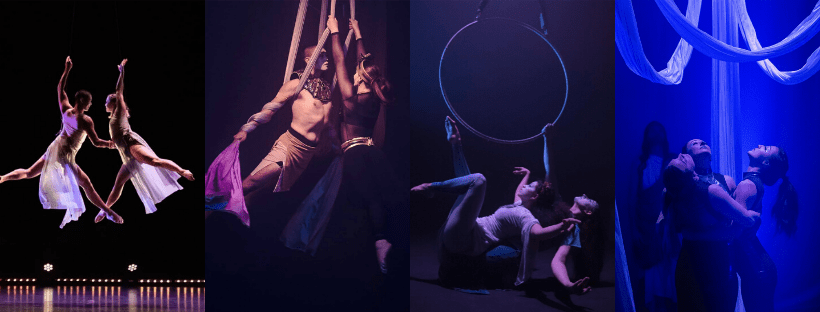
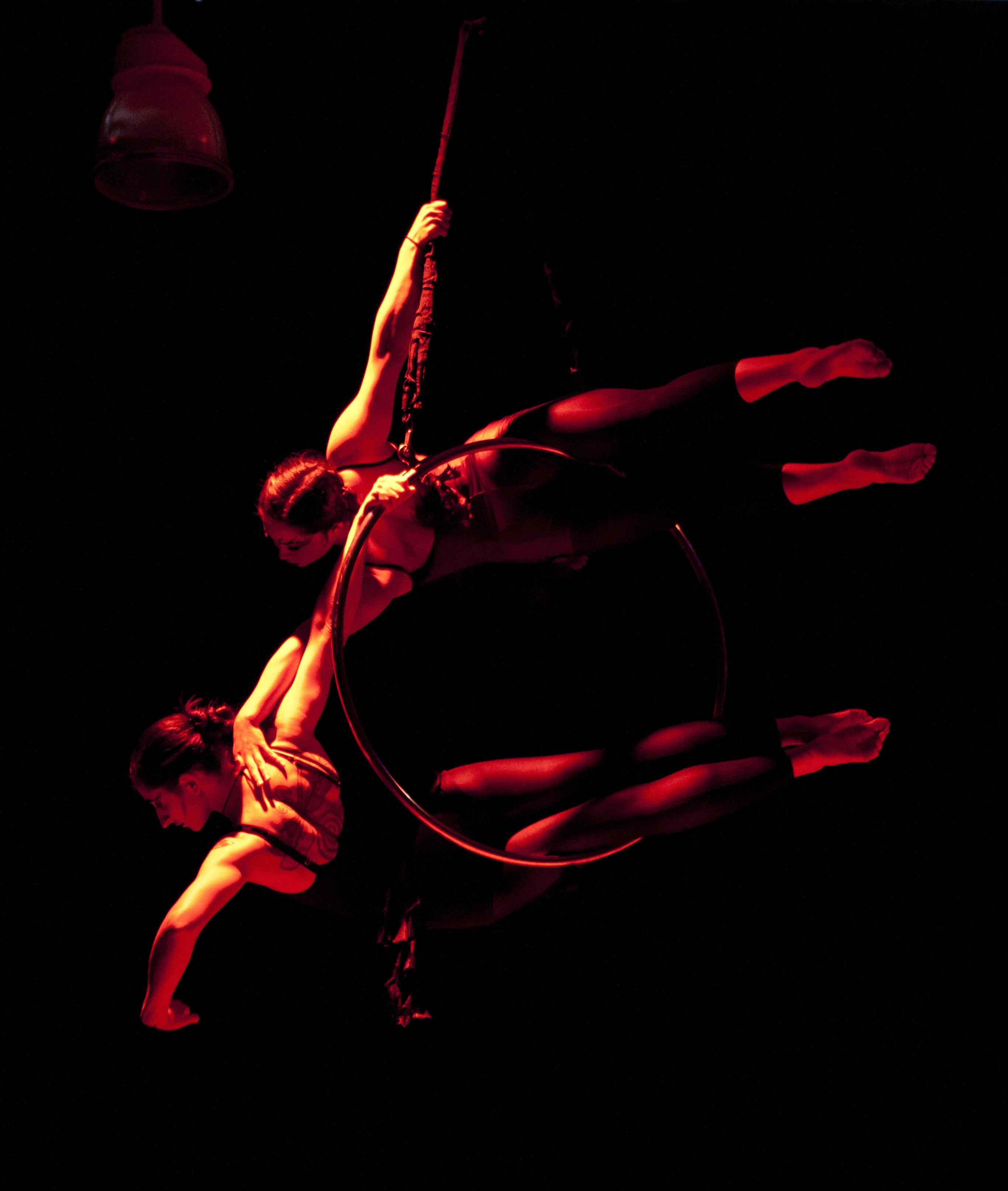
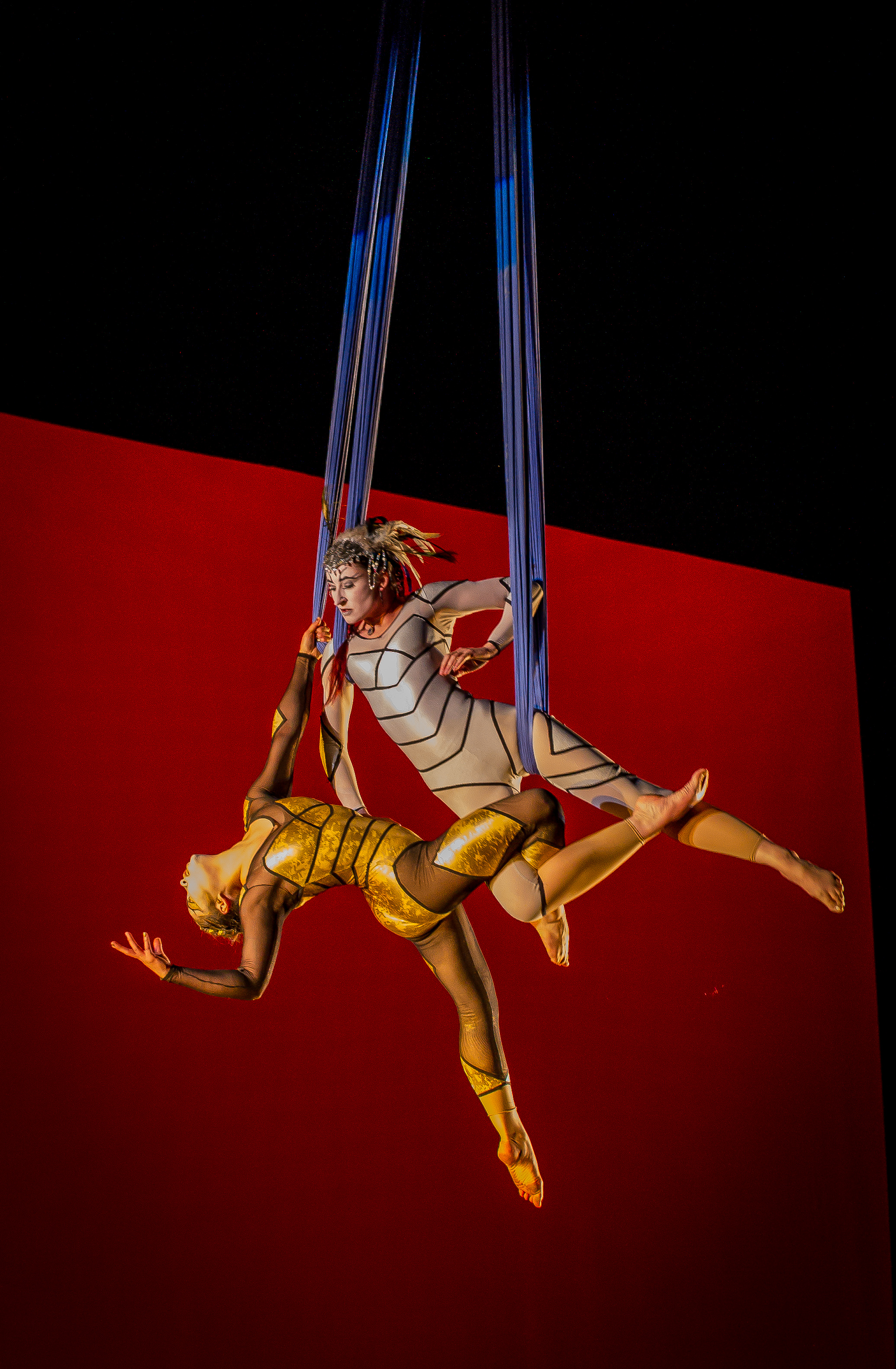
But aerial dance also often necessitates creating and building movement with other dancers and partnering and/or working in groups is a very common exploration in this work, as it is in most dance forms. The images in the header of this article demonstrate some of the moments of powerful connection, narrative, and tenderness expressed in my company The Cabiri‘s work in the past few years. Today, the notion of entering into someone else’s physical bubble, sharing breath and sweat with them over many days and hours of rehearsal and creation and performance feels so forbidden. COVID-19 has created distance on more levels than I can possibly fathom.
So now, in the age of COVID-19, what does aerial dance look like? Throughout most of the country (and world), indoor fitness and dance studios have been closed for weeks. Some may never reopen after this crisis subsides, due to lost revenues during the pandemic. For those of us who have our own studios, we have been able to continue our aerial dance practice a little bit while maintaining our mandated closure. But the way we used to practice, teach, and create is in the past for the foreseeable future.
Me trying to practice in a cotton mask at my currently-closed Seattle studio Arcadia.
As some studios are allowed to reopen, a huge litany of new considerations, liabilities, and requirements will follow. Sanitization, physical distancing, symptom monitoring among staff and students are among the new factors we will have to consider. I recently tried running some basic aerial dance sequences in a double layer cotton mask and, while it did not impede my vision or move around during all of my spinning and inversions, it did create a restriction on my respiration reminiscent of high altitude training. I offer words of caution to anyone who intends to incorporate mask-wearing into their aerial practice or teaching – you will not be able to do everything you used to do. Be prepared to modify your practice, take more breaks, and not have the stamina you previously enjoyed.
Photo of me and Kirra Steinbrueck in TEWAZ (2014) by David Rose Photography.
But what of the connection we used to share with our students, our fellow dancers, and perhaps most importantly our audiences? This will suffer too in the coming weeks, months, and potentially years. The days of sitting in an enclosed space with dozens or hundreds of other people are over for the foreseeable future. The beautiful intimacy and connection we once knew as artists sharing physical space with each other as part of the co-creation process will not exist for many days to come. And so what stories will we tell? What dances will we make? How will we explore and create connection while maintaining physical distance? The grief I carry at the loss of my primary medium for making sense of life and the world has impacted me profoundly.
And so I wonder if perhaps it is time to explore isolation, distance, and those dark spaces where we exist alone. And although the darkness can be frightening because so little is revealed and so much is unknown there, it is also the home of the Mysteries and is the realm of dream, imagination, and the subconscious. We emerge from and return to darkness in the course of our lifetimes. Personally, I look forward to an opportunity to explore those spaces more intentionally this year to see what emerges.
The TL:dr version is that I work a full time day job as a paralegal and am the volunteer Managing Director of a nonprofit performing arts organization during nearly every spare moment of time when I’m not at work. I take full responsibility and ownership of the lifestyle I have created for myself, but it can be difficult at times.
Despite how busy I am and how essential I am at both of my jobs, with my average workday spanning nearly 14 hours 5-7 days a week, I often feel alone. The assumption is that busy = fulfilled, right? That person whose Google calendar is a checkerboard of appointments and obligations lives an amazingly rich life, right? What if that wasn’t actually the case?
I have spent a lot of time reflecting upon this lately. Socially, I am an introvert. I do not seek to spend time in large groups of people nor do I relish making new friends. My attempts at small talk often meander into the awkward department. I have always been a quality-over-quantity kind of person, seeking to spend time with people whose personalities and interests I feel drawn to most strongly. Could this be the reason I sometimes feel isolated? Perhaps, but I don’t think so.
I recently had the realization that nearly all of my interactions with people every day are transactional in nature. I report to work and say hello to my colleagues. I arrive at the studio each day to clean and prepare to teach, rehearse, or take class. I greet my fellow instructors, troupe members, and students and then we conduct the scheduled activity and everyone goes their respective ways at the conclusion. In the course of these activities, connections are formed. I have great fondness and respect for so many of the people I work with, perform with, and interact with as a teacher or a student and I cannot imagine my life without these incredible humans. But at the same time, those relationships do not fit into my definition of friendships – primarily because the interactions are somewhat secondary to the transactions. We are all doing these things in service of a larger thing – a paycheck, a fitness or artistic goal, or an upcoming performance. I’m the first to admit that if I am having a hard day and need to talk or am looking for someone to grab a cocktail with after work, the people with whom my interactions are primarily transactional are not on the list of people I contact.
Professional boundaries and distribution of roles in my life are also very important to me, which can result in isolation. I would not expect the person I love to train circus with to also be the person I geek out with about astrology or metaphysical studies. I don’t expect my romantic partner to be my sounding board for all of my leadership-related woes. I would not feel comfortable buddying up with students who are two decades my junior to vent about the challenges of entering middle age, nor would that be appropriate.
I have also noticed how much interactions have become less about face time and more about interfacing and communicating through screens, an inherently sterile and cold medium. Yet people break up via text message. People quit their jobs via email. People spend hours discussing heated, emotional topics via instant messaging. Have we forgotten how to talk to each other? Is this truly the appropriate medium for matters of love and life? Have we grown so attached to our large and small glowing boxes that real, in-person interaction is becoming irrelevant? Are we really so busy that we must rely on such an impersonal method of communication? Will there come a day when the ability to read and interpret body language and facial expression isn’t second nature anymore, and is instead a novel skill? Not in my lifetime, I suspect, but probably not all that far off either.
And so, when I do find those rare moments of free time, I occasionally feel lost and unsure of what to do with it. I can only read, write, do yoga, and meditate so much. Introverts are not anti-social; we crave connection as much as anyone else. My insanely packed schedule means I click NO on the RSVP page of events more often than not, but there are times when an outing with a friend or two sounds lovely. I find myself more often than not being the one to initiate plans with friends, which also starts to feel tiresome and lonely at times. Did they forget I exist?
The rare occasion when my notification light comes on and someone is reaching out to me just to say hello or schedule a time to get together with no prescribed agenda and no transaction in mind is becoming more and more rare these days. Was it something I said?
What this post is not – a plea or suggestion to those who know me to invite me to your next BBQ or brunch. I’m doing just fine, but I appreciate the concern. What this post is – a reminder that loneliness comes in many different forms. Never assume that because someone is busy, they are living a fulfilled and rich life. Don’t stop inviting those folks to your gatherings. Don’t hesitate to send a hello message or invite them to lunch. They are likely to decline (because busy) but it can help to alleviate those empty feelings and let them know you are thinking of them. And who knows? Perhaps they will actually show up sometime.
And for those of you who do remember your exceedingly busy and often absent friends, thank you. Keep remembering us. We think of you often, even though you might not see us much.
Many of us who end up in a leadership role at a nonprofit organization never intended, nor consciously desired to be there. Often, people are drawn to a cause and find themselves contributing in meaningful ways. And their role grows over time, until they find themselves in a position of leadership at the organization, not by any intentional design or aspiration, but by default. As the Cabiri (a nonprofit organization where I am a founding member and now the Managing Director) approaches its 20th anniversary a month from now, I find myself reflecting on how I got here and what the future may hold. I hope that by sharing some of my world, it will bring new perspective and understanding to the countless others who are doing this work all over the world. Our nonprofit leaders are a resource more precious than gold – they are worth protecting and cherishing.
My History – The Short Version
In 1999, I was 23. The ink on my two bachelor’s degrees was less than a year old, and I’d been living on my own in Seattle for 4 years. A veteran of the performing arts world (I started in musical theatre at age 5), I was looking for something new to put my creative energy into as an adult. I discovered street theatre and performance art and felt strongly drawn to its visceral, honest, powerful potential.
John Murphy & me; Photo by John Cornicello
I met John Murphy, Founder and Artistic Director of the Cabiri on a sidewalk in March of 1999 and we, along with 3 other performing artists, formed the troupe shortly thereafter. Myth and folklore was always the focus of our work – movement, props, costumes, and music were all informed by the stories that inspired us.
After a year or so of performing on street corners and outdoor festivals, we decided it was time to legitimize our work by becoming a nonprofit organization and applying for tax exempt status from the IRS. Things moved quickly after this – in November, 2000 we became legally incorporated in Washington State and in 2001, we were granted tax exempt status. I filled out the application paperwork for both of these milestones, with the help of an attorney friend. We opened a bank account at the now-extinct Seafirst Bank. I kept the checkbook in order. We started applying for grants, and were quickly successful at receiving a bit of funding for our performances. I was our primary grant writer, self-taught. My title in the Cabiri was “Secretary / Treasurer” for many years. And so began my gradual climb into a leadership role in the organization. These invisible yet essential tasks had to be done by someone, and no one else was stepping forward to take them on. Leadership by default.
At some point several years into our history, John and our Board of Directors gave me a new title – Managing Director – to honor the amount of work I was doing. Elevation and acknowledgment felt good, but I didn’t know how to be a leader. I came into the organization driven by my passion for storytelling and performance, not to make business decisions, interact with vendors, troupe members, and volunteers, and handle interpersonal dealings with other artists and organizations from a position of authority. And I certainly never imagined myself managing a six-figure annual budget, a dozen staff members, volunteers, and a cultural arts facility.
The Lady Behind the Curtain
Much of the work I do for the Cabiri (entirely as a volunteer) is invisible. A small sampling of the ongoing tasks I oversee includes filling out annual insurance renewal applications, running payroll each month, paying all our bills, filing our annual tax returns, negotiating contracts and leases, applying for and managing grants, managing the budget, updating both our web sites, responding to emails, taking out the trash at the studio, managing our aerial curriculum and instructors, creating and updating the monthly studio schedule, interfacing with renters, teaching 3-5 classes each week, performing in the Cabiri, and interfacing regularly with our social media, marketing, and technical personnel and our board of directors. The cost of failure or ineptitude in most of these areas is very high. Some of the items on that list are thing I enjoy doing; the majority of those items are compulsory.
Did I mention that I also work full time as a paralegal? Are you seeing that list and thinking that a lot of these jobs really should belong to a bookkeeper, a lawyer, a studio manager, and a janitor? I agree completely. But, given how small we are and how little resources we have, all of these responsibilities rest on my shoulders, along with a couple of other dedicated, competent, trustworthy people. And so my leadership style is largely a byproduct of my workload, i.e. there isn’t much room for things that don’t add value.
Why don’t I delegate more? This is a question I hear often. Delegation of critical functions is a risky proposition that can have catastrophic effects if it doesn’t go well. A local arts council got into hot water with the IRS after a series of bookkeepers came and went and knowledge and responsibilities became diluted over time until eventually no one was performing the required tasks. Delegation of critical functions is also a time-consuming process, often taking months or even years to fully realize. It is very uncommon to have a volunteer with the proper skill set and dedication cross our path and choose to stay involved for the months or even years needed to successfully take on a critical function in the organization. It is often more efficient and less risky to maintain the status quo. (I am happy to report that our newest work study volunteer has taken over the task of keeping the studio plants alive and taking out the trash on Wednesday nights. Small victories are worth celebrating.)
I am inspired by people who work hard, who bring depth and richness to their work, and who are proactive about what can be done to make improvements and add value to the organization. I cherish people who communicate clearly and often, who collaborate and keep me informed, who understand the importance of my role and its many facets. Reliability, consistency, directness, and honesty are very important to me. When time, energy, and resources are scarce, I seek to find allies who are assets. I intentionally create distance from individuals and organizations who do not add value, who create negativity, chaos, and uncertainty. Every decision I make as a leader serves to support, protect, and help the organization grow and expand.
The Price of Leadership
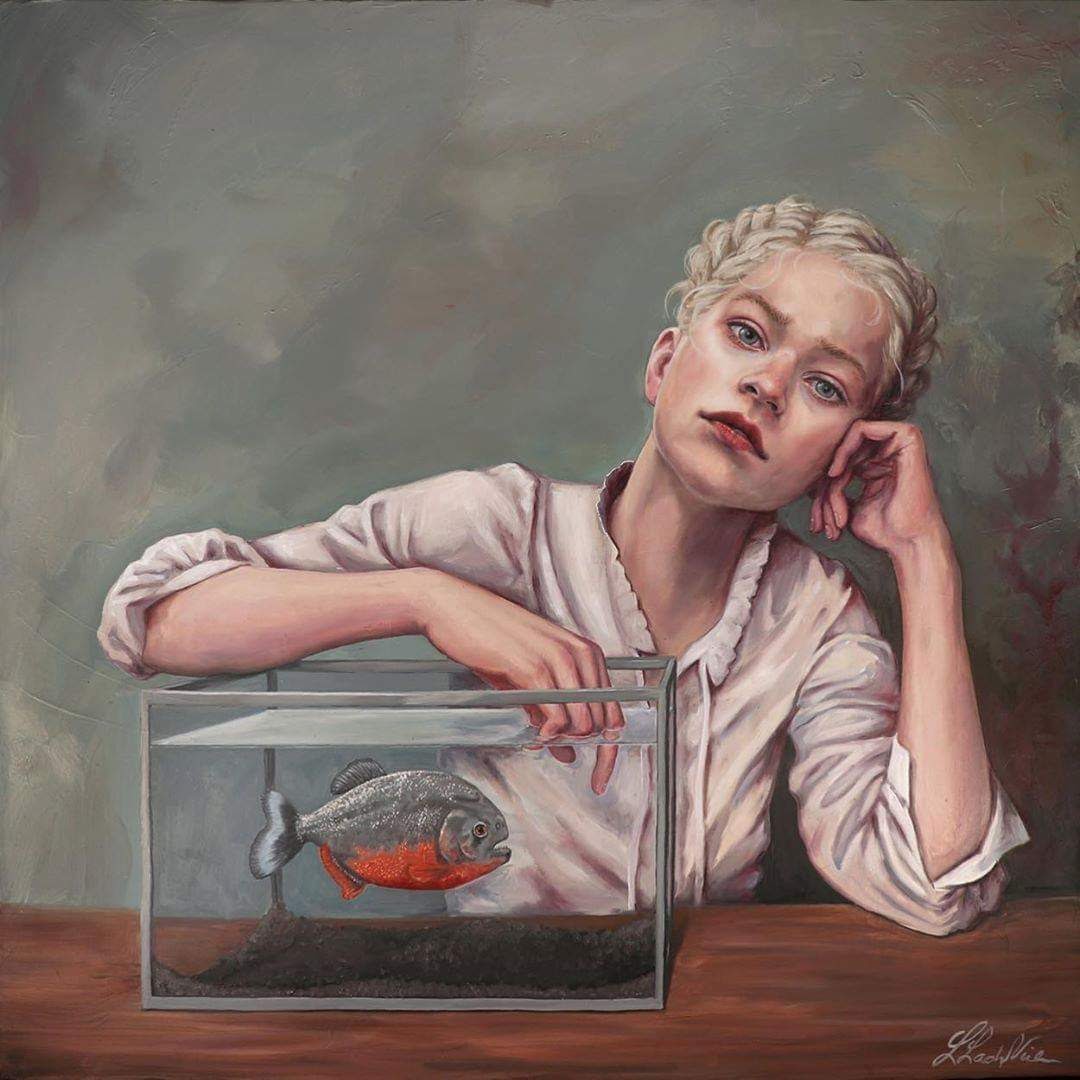
Art by Lisa Lach-Nielsen
Being the boss of anything can be a pretty thankless job. (It can also be deeply fulfilling and incredibly rewarding, but that is not the focus of this article.) When something isn’t right at an organization or someone has a bad experience, the leaders are blamed – sometimes rightly so, other times at no fault of leadership. Conversely, when everything is running smoothly and life is good, the leadership is rarely thanked or acknowledged. It is easy to sit back and enjoy the beautiful fields of flowers before us (or perhaps even pick or stomp on the flowers) without considering the farmer who labored to create it. Stepping into a leadership role is like stepping in front of a firing squad of critics. Leaders put themselves into the public eye, and are often on the receiving end of endless unsolicited suggestions and advice on how to run one’s business. It is a role that truly tries one’s patience on a daily basis.
Managing human beings (both volunteers and employees) is perhaps the most challenging aspect of leadership, and rife with paradoxical expectations. We humans are special snowflakes. The approach that works well for one person is dreadfully off putting and perhaps even rage-inspiring for another person. Leaders should be fair and consistent, yet also incredibly flexible. (What?) Leaders are expected to adapt their approach and communication style to accommodate whichever snowflake needs their attention today. We can’t simply work to understand ourselves, our challenges, our shortcomings; we must also become masters of everyone who works for us, and behave accordingly. We aren’t allowed to have a bad day or be grumpy or short with someone. We aren’t allowed to get angry or have a meltdown in public. We must extend understanding, compassion, and forgiveness when people make mistakes, even if no apology is offered and no responsibility is taken by the offending party. Yet we apologize often and thank people for their feedback, even when it stings so hard we have to fight back tears. We aren’t allowed to arrive late or forget something important, because all eyes are on us. When someone doesn’t follow policy and we cite policy in a conversation with them, we are viewed as impersonal, unkind, and bureaucratic. If we are too gentle and subtle with feedback, it often goes unheard. When expectations aren’t communicated clearly enough, people become frustrated. When expectations are communicated too often and too explicitly, we are resented as micromanagers. Leaders who make an effort to connect on a personal level are seen as warm by some and nosy by others. It is impossible to be the perfect boss to every person. When there is a problem or challenge and a difficult conversation must be had, guess who’s going to be in that room trying to sort it out the best she can every single time? Yup, it’s me. Thankfully I’m almost never in that room by myself. The support and compassion of my co-leader John makes all of this infinitely more bearable.
And so I try my best, and I acknowledge my many imperfections. My work style is task-oriented, goal-focused, logical, and direct. I prefer to address issues directly and quickly and shine light on situations in order to move forward. I am not afraid to take action and make changes in order to protect the organization and the studio and to serve the ultimate goal: added value. I am not afraid to speak up when something isn’t working and I am never shy about giving feedback. But I sometimes forget to say thank you and show appreciation. My direct, linear, fact and task-oriented approach can be be perceived as cold, uncaring, and harsh. Slowing down, improving my patience, and learning to let the little things slide has been the focus of my personal development as a leader in the past few years. I listen more and ask questions instead of jumping to conclusions. I consciously strive to create opportunities for people and actively support their personal and professional growth as much as I can. I admit my mistakes and faults. I apologize often when I have misstepped and sometimes even when apologizing is just the right thing to do. I accept feedback and take it to heart without becoming defensive. I keep showing up each day and trying my hardest. And I still make mistakes, often.
Because of my workload and the weight of the responsibilities and expectations I carry, I live in a constant state of scarcity and the crushing pressure of obligations. That’s a heavy burden to bear. And it is a lonely existence. In the past few years and especially since we opened our studio, signs of stress are manifesting in my body. I have chronic insomnia, often finding myself wide awake at 3am (it’s my own personal witching hour) worrying about things. I have recently developed an occasional stutter when speaking. A year ago, I went to the doctor with chest pains which turned out to be “nothing,” i.e. no obvious physical cause. They still appear often, especially when my stress level is high. My hands sometimes shake. Nausea comes at times. Waves of vertigo and dizziness. I grind my teeth at night. Doctor visits have yielded no results – I’m healthy, with below normal blood pressure and absolutely no sign of disease. There are days when I wonder if it is more than I can bear. I am not sure what the breaking point looks like because I haven’t gotten there yet, but I have tasted it for sure. Without the unwavering support of my partner and closest friends, it would have happened already.
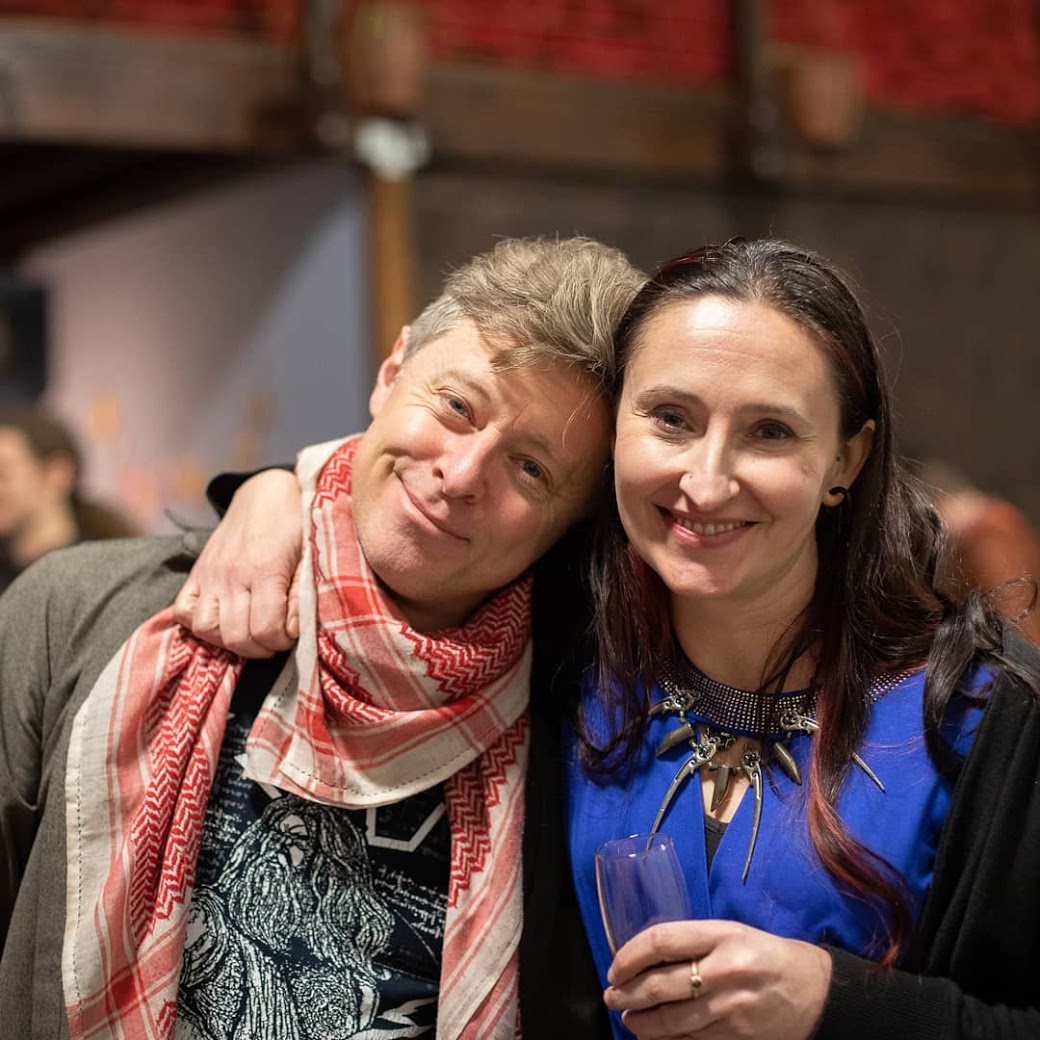
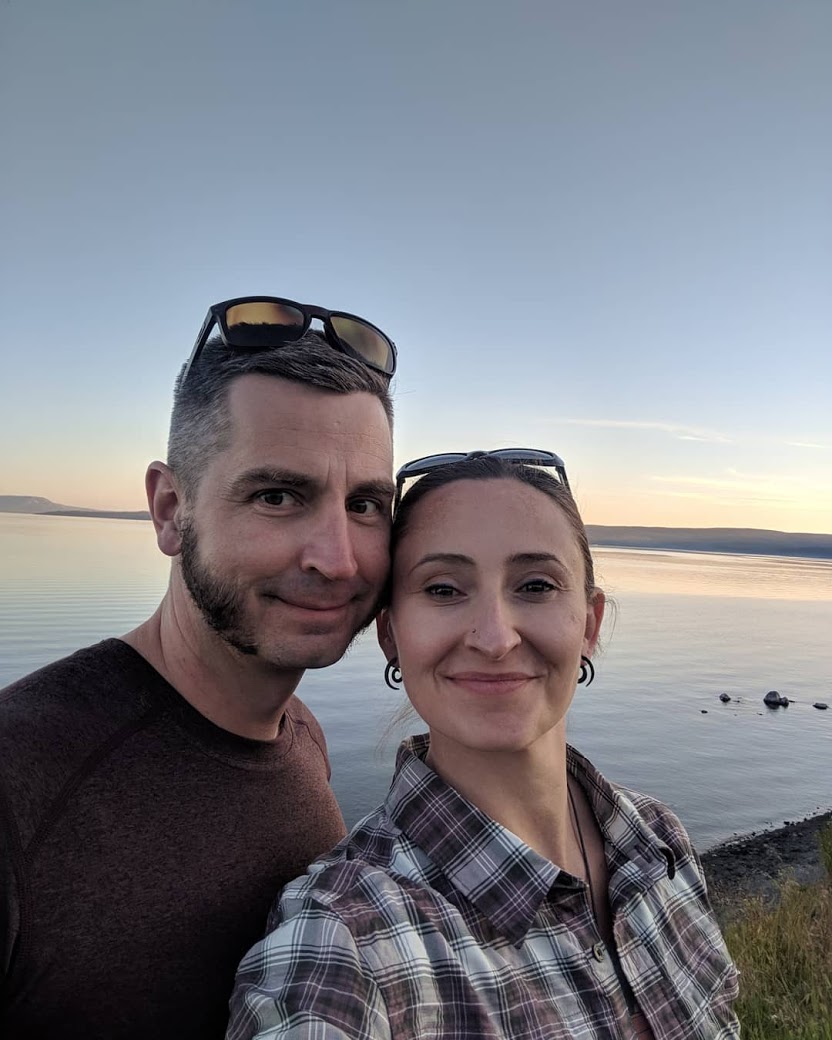
Graeme & Me. This precious man literally keeps me alive most of the time. He is a treasure.
If you’ve made it this far into this undeniably heavy article, my biggest suggestion to you is this: have patience with the leaders in your life.
If you have never been in charge of something, you cannot possibly imagine what it’s like to be in that role. No really, you can’t. Whether it’s your boss at work or the director of a nonprofit organization or a professor at school, they are carrying these burdens with them every single day. Be patient. Try not to judge them when they don’t get it right. They are humans too.
If you have time and energy to do more, thank them when things are going well; don’t take those times for granted. Find out how they like to be shown appreciation. Get them flowers on occasion, write them a thoughtful note, or bring them a little treat once in a while. Ask them if they need help, often. Even if they say no every time, it alleviates some of the loneliness to know that people are willing and interested in helping. Extend them respect, always, even when they are not at their best. Listen to what they have to say without interrupting. Give them space for their ideas and direction. Be open minded and receptive and honor their contributions. See if there are low level tasks you can do for them so they can focus on other things – like taking out the trash, vacuuming the studio, putting the mats away, refilling the paper towel dispenser.
Actions speak volumes for task-driven people like me. Show up, stand beside us, see what you can do to help. Put down your phone and look around to see what you can do to participate in creating, building, and sustaining the wonderful things in your world. Find ways to be selfless and generous every single day. I sometimes daydream that my organization would find 2 or 3 people with even just 25% of the time, energy, and competence I am willing to invest in our success. Can you imagine how much we could grow and thrive with more support? It is amazing to consider the possibilities if we weren’t in a constant state of scarcity. We could have a dedicated person to write grants and raise funds for us. We could have resources to pay our artists and teachers more. We could travel to teach and perform. We could afford the cushy toilet paper for the washroom.
But seriously, without the people who selflessly keep nonprofit organizations running, where would our world be? What would my organization be without my tireless dedication for the last two decades? Likely nonexistent. Nonprofit leaders are a precious resource worth protecting as fiercely as they work to protect their organizations. We must cherish every single one of them.
I don’t think we are ever ready to lose our mothers. I certainly wasn’t in 2002 at the age of 26. My heart breaks even today thinking of my younger siblings who were 22 and 20 at the time. They had yet to unravel the complexities of the parent-child dynamic as they grew into adulthood, still in the midst of parent-child rebellion and angst complicated even further by terminal illness. At least I got to know her as an adult, a peer, a friend. But I still wasn’t ready for her to leave.
Since that Christmas morning in 2002 when life departed her illness-wracked body and she found peace, alone in a hospital bed at dawn, her image has visited me in my dreams intermittently. It was often at first – I’d dream that the phone rang and she’d be on the other end with something to tell me. Those dreams felt eerily real, as if some part of her were actually communicating with me through dreams from the great beyond.
But as time has passed, she appears less in my dreams. Now when she shows up, she is more ephemeral, less bound by the mundane. She is of stardust, timeless and forever 51 years old. As I approach my 43rd birthday, I realize there will likely come a day when I have outlived her.
She often comes to me surrounded by or even in water. She was a Pisces and my natal moon is in Pisces; water connects us and is the element which best defined our dynamic when she was alive. Perhaps this is the realm her spirit found its way to in the afterlife – a world of ponds, rivers, oceans, and clear, warm blue pools. She once came to me in a dream sitting half submerged in water with a book that seemed alive, its pages depicting decaying flesh and images of death. She calmly showed me a few pages, then closed the book for it was not time for me to understand the mysteries of death yet. She was at peace, her blue eyes exactly as I remembered them. But the sound of her voice was absent. Perhaps I have begun to forget what it sounded like. Time can be cruel, slowly stealing our most precious memories.
Last night, I found her sitting near water, watching the waves crash. A storm was coming in and she was there to witness it. I suspect it is no coincidence that on the other side of the country, hurricane Florence is reaching the shore. This time, I did not see her face. Only her distinct shape, her hair, her hands. I sat beside and slightly behind her, first touching her back, then resting my head on her shoulder. We sat and watched the wind, the waves, the darkening sky. In the dream state, I knew that she was gone. I knew that this visit was not to be repeated in the physical realm. And so I savored it, despite its notes of foreboding. Sometimes we must accept what is offered, even if acceptance brings a bit of discomfort.
In alchemical ideology, the Red King represents the masculine – fire, the sun, sulfur. He is active and volatile. In his quest for a stabilizing, balancing energy he seeks the White Queen. She is represented by water, the moon, mercury, receptive and fixed. Together they unite in the chemical marriage, combining their energies to create something greater than the individual parts themselves. Sol and luna. Light and dark. The two polarities, dancing their eternal dance. Attraction and repulsion. Forever striving for balance amidst the chaos.
But this is not about alchemy. There is another Red King in modern times, a richly talented artist named Johann Bran Cleereman who called the Northwest home for many years.
Johann left this earthly realm this week, suddenly and unexpectedly, in an accident in Cambodia where he has lived for the last few years, making his delicious absinthe varietals under the moniker Syn Absinthe (that’s him at the end of the video). His passing has affected me more than I might have imagined. While I did not have the chance to know him well as a friend, I did have the opportunity to see his work and perform alongside him on a few occasions, and wanted to share my thoughts and remembrances of him. He touched me and so many others deeply, and changed me profoundly as an artist.
I first heard Johann’s music in 2007 when in search of accompaniment for my company The Cabiri‘s annual mythological dessert theater cabaret. Materia Prima is eight minutes and 19 seconds of hauntingly beautiful, darkly enchanting piano and synth that hypnotizes and weaves auditory mystery so adeptly. It was perfect for our work, and we continued to use Johann’s music in our shows for the next several years including our performances of Tales of 13 Witches in 2008 and 2014, in which his track Somniferum became the theme song for our light-walkers, the Benandanti, and the streghe they battled every show. Very few composers write the kind of music that resonates so beautifully with our work. I cannot express how deliciously macabre it is to dance to Johann’s music.
In 2009, Johann appeared as a special guest at the 10-year anniversary show for The Cabiri. We invited artists whose work was especially meaningful to collaborate with us in a large, free outdoor performance in Seattle’s Cal Anderson Park. Johann drove up from Portland and put together an elaborate, exquisitely-costumed and performed set to accompany our outdoor presentation of the Benandanti piece we so loved.
I remember the smell of his handmade leather accoutrements, his carefully prepared props, his exceptional compartment, his voice. He was fascinating, captivating, and centered, even among the chaos of a city park on a sunny spring day. Johann was unwavering in his commitment to character onstage. He was fearless and fully immersed, a psychopomp from the aether, just visiting to give us a glimpse into his beautiful darkness, draped in leather and smelling of earth, ash, and resin.
In autumn 2009, Johann invited me to perform in a show with him at the Columbia City Theatre in Seattle. I donned my fire fingers and favorite bellydance attire and dove into the sonic abyss with the Red King for an evening. In classic Johann form, he began the evening by distributing test tubes of his home made absinthe to the audience to set the mood. What followed was a cacophony of fire, smoke, sound, and performance that is nearly impossible to describe. Part ritual, part performance art, all darkly haunting, beautiful, powerful, and passionately given, like this 2011 performance at Black Circle Fest in Portland.
Johann, your impact on me as a performing artist and ritual theater practitioner was profound. As I step into the dimly lit theater at the end of this month to bring life to a myriad of characters including ghosts, a drowning soul, and a bloodthirsty countess at our 10th annual Halloween show For Life Eternal, I will be thinking of you. We are dedicating this show to you, a fitting tribute to an artist who inspired us so much. Whatever afterlife you have found yourself in, I hope you found your White Queen. And I hope there are green fairies and tropical paradises galore. You will live on in our hearts, spirits, and souls always. Audi ignis vocem!

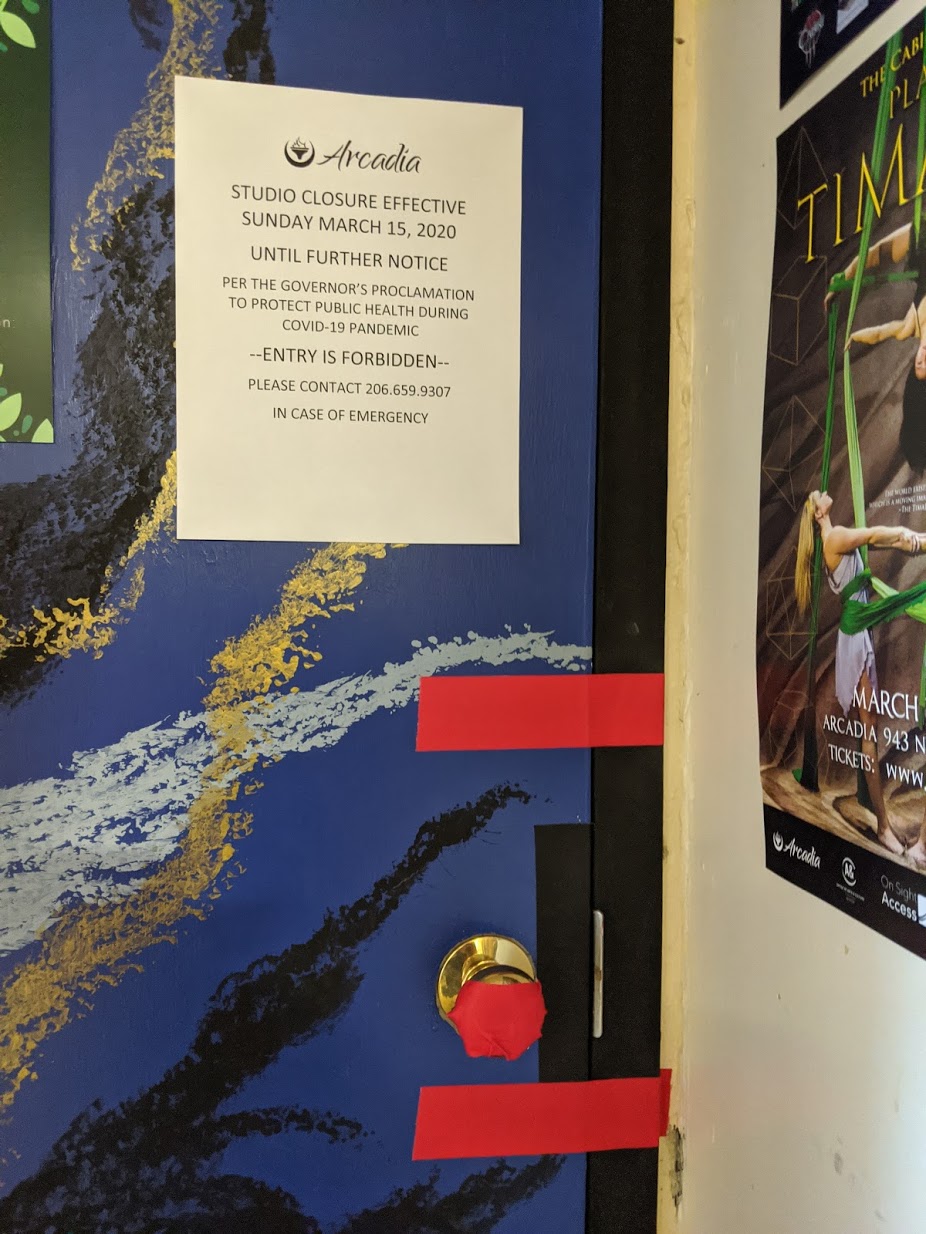 68 days since we locked the doors of our beautiful cultural arts studio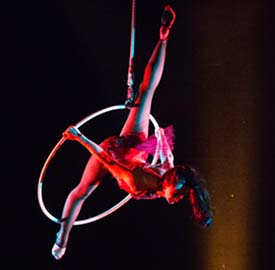
 But aerial dance also often necessitates creating and building movement with other dancers and partnering and/or working in groups is a very common exploration in this work, as it is in most dance forms. The images in the header of this article demonstrate some of the moments of powerful connection, narrative, and tenderness expressed in my company
  So now, in the age of COVID-19, what does aerial dance look like? Throughout most of the country (and world), indoor fitness and dance studios have been closed for weeks. Some may never reopen after this crisis subsides, due to lost revenues during the pandemic. For those of us who have our own studios, we have been able to continue our aerial dance practice a little bit while maintaining our mandated closure. But the way we used to practice, teach, and create is in the past for the foreseeable future.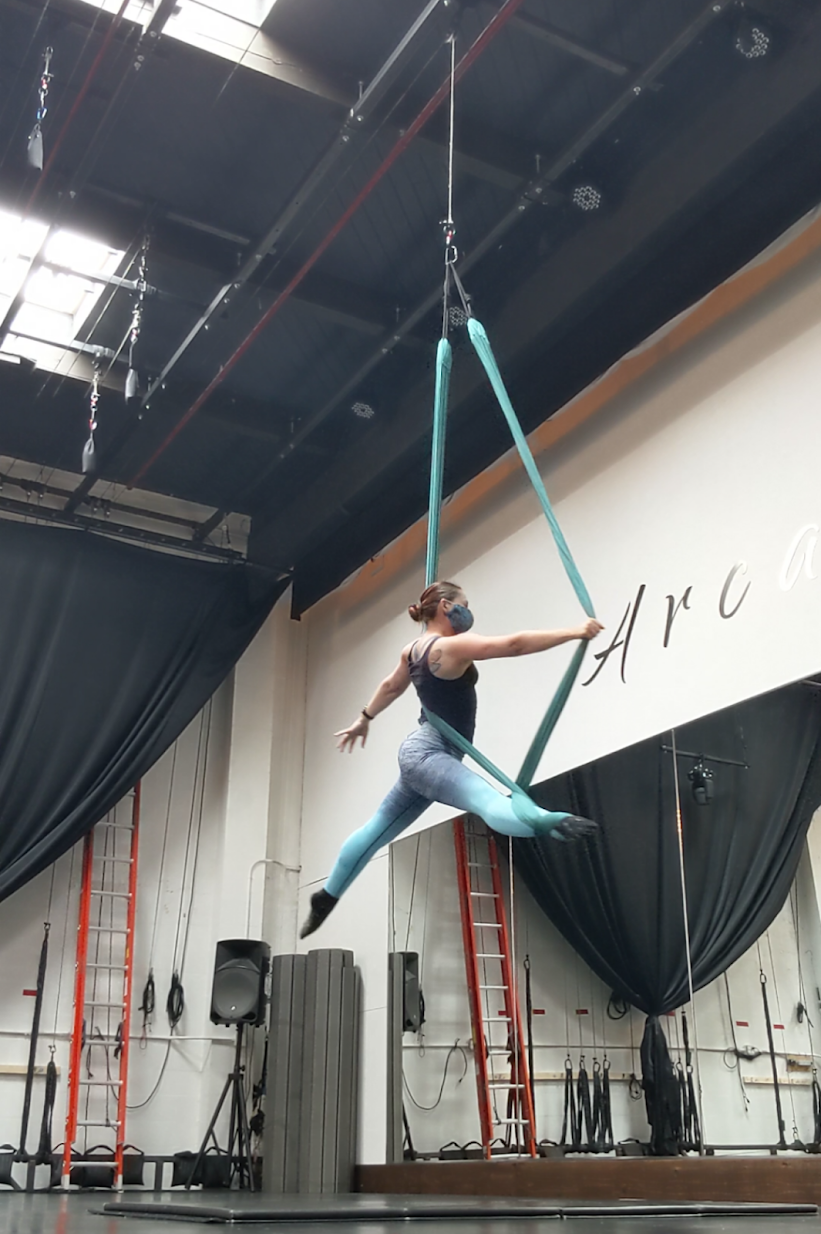


 In alchemical ideology, the Red King represents the masculine – fire, the sun, sulfur. He is active and volatile. In his quest for a stabilizing, balancing energy he seeks the White Queen. She is represented by water, the moon, mercury, receptive and fixed. Together they unite in the chemical marriage, combining their energies to create something greater than the individual parts themselves. Sol and luna. Light and dark. The two polarities, dancing their eternal dance. Attraction and repulsion. Forever striving for balance amidst the chaos.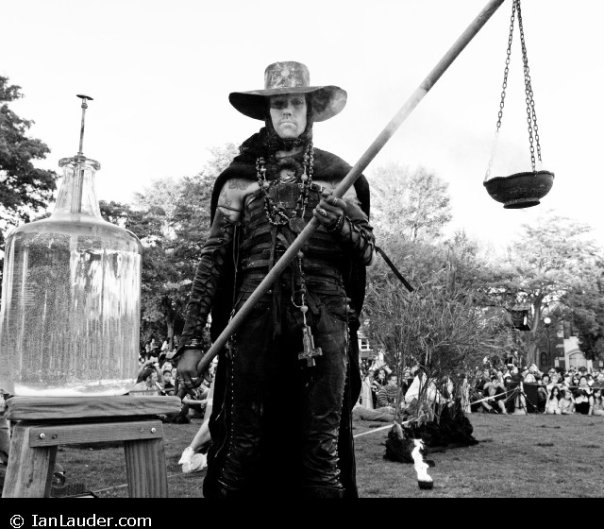
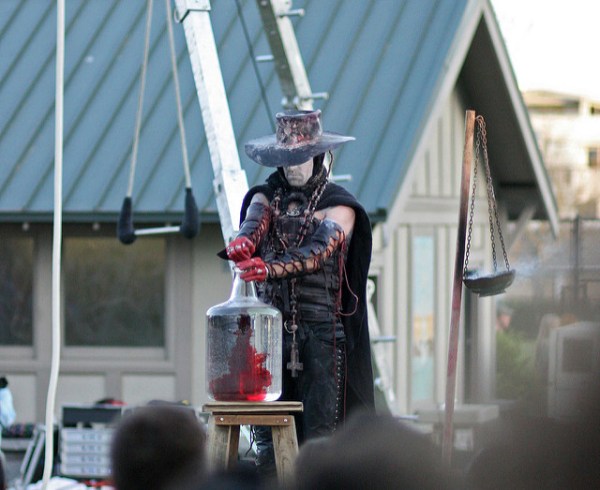 In 2009, Johann appeared as a special guest at the 10-year anniversary show for The Cabiri. We invited artists whose work was especially meaningful to collaborate with us in a large, free outdoor performance in Seattle’s Cal Anderson Park. Johann drove up from Portland and put together an elaborate, exquisitely-costumed and performed set to accompany our outdoor presentation of the Benandanti piece we so loved.
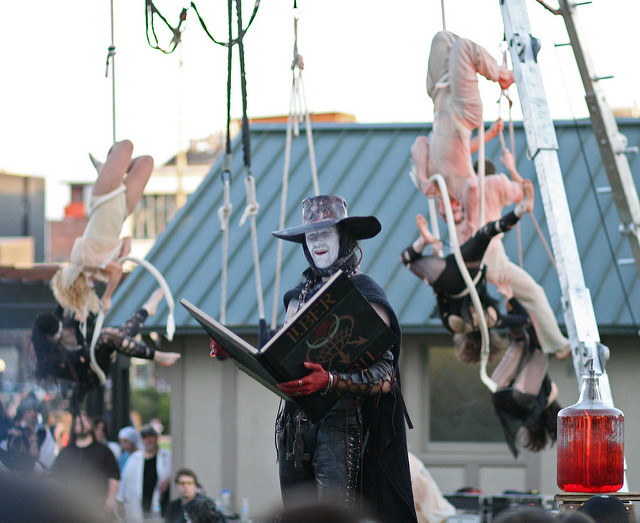 I remember the smell of his handmade leather accoutrements, his carefully prepared props, his exceptional compartment, his voice. He was fascinating, captivating, and centered, even among the chaos of a city park on a sunny spring day. Johann was unwavering in his commitment to character onstage. He was fearless and fully immersed, a psychopomp from the aether, just visiting to give us a glimpse into his beautiful darkness, draped in leather and smelling of earth, ash, and resin.
 In autumn 2009, Johann invited me to perform in a show with him at the Columbia City Theatre in Seattle. I donned my fire fingers and favorite bellydance attire and dove into the sonic abyss with the Red King for an evening. In classic Johann form, he began the evening by distributing test tubes of his home made absinthe to the audience to set the mood. What followed was a cacophony of fire, smoke, sound, and performance that is nearly impossible to describe. Part ritual, part performance art, all darkly haunting, beautiful, powerful, and passionately given, like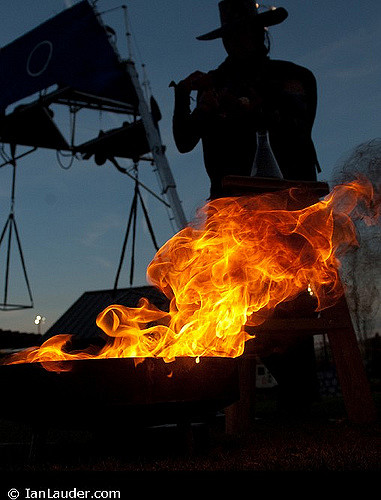
 myth.and.the.muse
You must be logged in to post a comment.