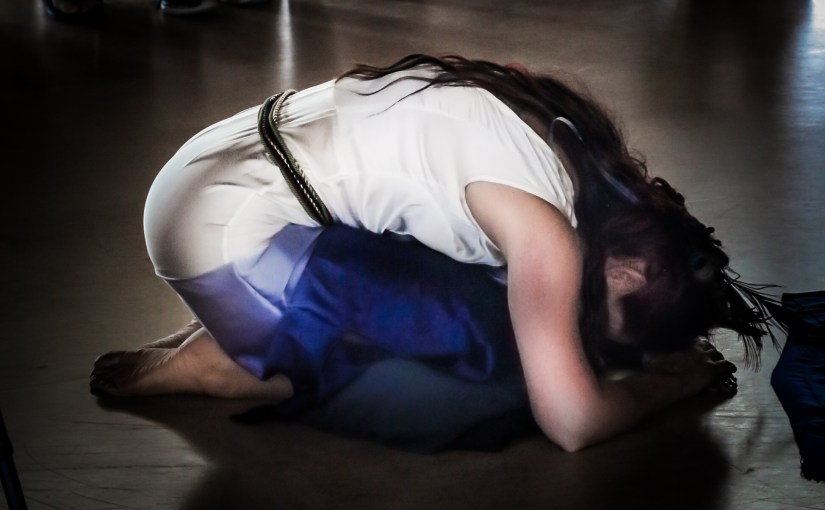
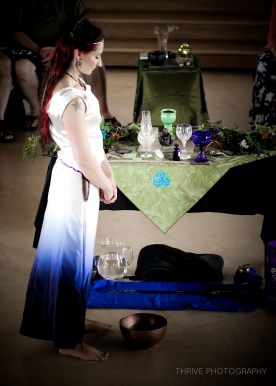
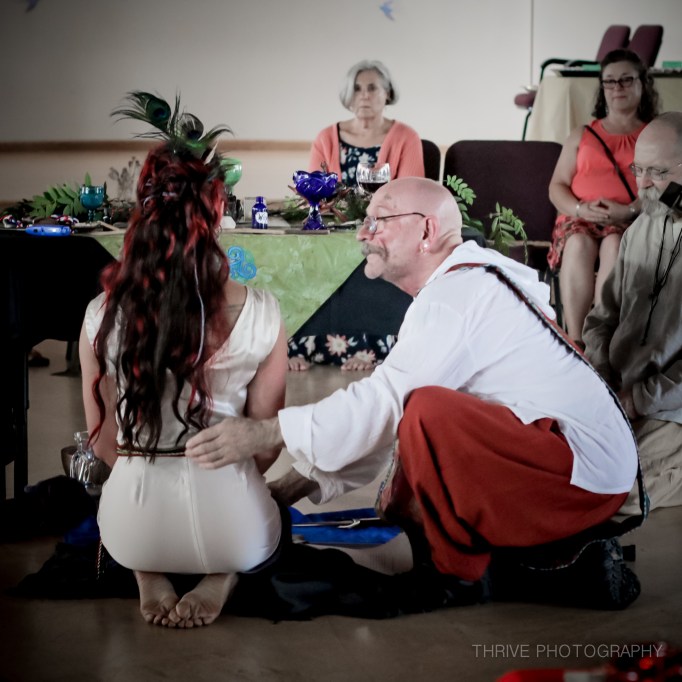
On September 3, 2017, I underwent the Ritual of Ordination within the Wiccan church where I have practiced and studied since 1999 – The Rowan Tree Church. The Rowan Tree Church and the Tradition of Lothloriën was founded by Rev. Paul Beyerl in the mid 1970s in Minnesota.
 Some of my earliest connections to paganism were inspired by The Mists of Avalon, a book written by Marion Zimmer Bradley in the early 1980s. This book and the sequels that followed are a portrayal of Arthurian legends from the perspective of the women in the stories. In my late teens, as I began to discover earth-based spiritual practices, I was enchanted by the book’s depictions of priestesses who lived on the idyllic hidden isle of Avalon, teaching, studying, and dedicating their lives to the studies of herbal medicine and magic, ritual, healing, rites of passage, and divination. I wondered how one might make their life’s work something similar in the modern world. I imagined tattooing a tiny blue crescent on my forehead along my hairline, the mark of a priestess in the Avalon tales. For those familiar with astrological studies, I am a classic Neptune in the First House personality – a daydreamer, capable of fully immersing myself in imaginal realms. I dreamed of living outside of time in a place untouched by current events and struggles. But even the veil of Avalon can be pierced and idyllic realms are not always what they seem to be.
While these fantasies dissipated with the passing of time, my vision of living a spiritual lifestyle that drew me closer to the natural cycles of the earth and the heavens and lifelong study of the arts magical has come to fruition. I am a High Priestess living and coexisting within our modern world, serving the divine and the pagan communities around me. I have bound and sworn myself to this work for the rest of this lifetime, and perhaps beyond. My dedication to this path has never wavered in the 23 years since I found myself upon it. In my early 20’s, I began the process of having an elaborate full-back tattoo composed of pagan imagery etched upon my skin. I recall a pagan friend at the time observing “Wow, you are really committed to being a pagan, aren’t you?” and realized it had never occurred to me that I would not always be a witch.
 Just over a year has passed since my Ritual of Ordination last Autumn. Nearly that same amount of time has elapsed since Rev. Paul and Rev. gerry left Washington State to make their new home in the Mother Valley in Minnesota. There has been so much change here, yet much has remained the same. Our family of local members has held steady and the full moons and Sabbats are observed according to the Tradition of Lothloriën. The Wheel of the Year turns. The moon waxes and wanes. The sun rises and sets.
According to Merriam-Webster, the word “ordain” means “to invest officially (as by the laying on of hands) with ministerial or priestly authority.” In the journey of Pathworking that leads to ordination within Lothloriën, there are many levels of commitment a student must make before reaching ordination. The Seeker’s dedication, persistence, morals and ethics, skills as a healer, writer, and ritual practitioner are tested.
In addition to formal studies including reading, writing, and research, there are several rites a student undergoes prior to ordination. Early on a student’s path, the Ritual of Dedication is performed wherein the Novice Supplicant affirms their commitment to the Path, states their intentions before the God, Goddess, and Universe, and receives their Mentor’s blessings in sacred space. A sacred candle is lit and it is a joyous occasion. I have counseled my students that Dedication can be thought of as “initiation lite” because it is the dipping of one’s toes into the sacred waters of Priest(ess)hood.
After many months (and potentially years, as it is the case with most in the Mystery School) of continued study, the Novice may petition the College of Mentors to become a First Degree Initiate within our Tradition. If the student has completed the appropriate reading, writing, and demonstration of ritual skills and their life is sufficiently in balance, the Ritual of First Degree Initiation is conducted. This is a much more serious, formal, and complex rite than the Ritual of Dedication requiring memorization of several passages of text and a wide variety of other preparations that challenge the student physically, emotionally, and spiritually. After one becomes a First Degree Initiate, the work, practice and study continue and the student does not emerge from the veil of secrecy just yet. Once the student is well over halfway finished with their work in preparation for Second Degree Initiation and Ordination, the student must undergo the Ritual of the Sacred Yoke, a formal yoking of the body, mind, and spirit to Lothloriën. This is the public “coming out” ritual, where the student sheds the veil of secrecy under which they have remained for many years in preparation for Ordination. Within about a year of the yoking ritual, the Priest(ess) will undergo the Ritual of Ordination, another highly formal, complex, public rite at which they are officially infused with the responsibility, connection, and servitude of Priest(ess)hood. The student is now referred to as a Reverend within Lothloriën, and can perform any of the rites of passage of our Tradition including handfasting, baby blessing, and rites for the dead. I first entered the Mystery School in October of 1999, and nearly 18 years later I was ordained. It is appropriate that it took nearly half my life to reach this point in my spiritual work. And yet, my studies are not yet complete; I will continue my work with the goal of someday becoming an Elder of Lothloriën.

When people have asked me if I feel different now that I am Rev. Charly, I often give a quintessential Aquarian answer – yes and no. Like most of the rites of passage I have undergone in my life, the ordination ceremony held in September 2017 felt like a culmination of work, happening at the right place and time in my life. The ritual itself was deeply moving, intense, complex, and seemed to pass by in the blink of an eye. The months I spent preparing, memorizing, planning, organizing, and inviting friends and community meant that everything came together smoothly and just as I had imagined. The loving support and assistance of so many friends made the actual day come off without a hitch.
 Donning the mantle of Reverend does feel like a somewhat profound change, and I am still adjusting to the title and the public perception that comes with it. Female Reverends are not very common in our society, and I feel as if I am forging new territory as I define and discover for myself what it means. In the time since my ordination, I have had a few different individuals assume that I obtained my credentials on the internet with no real work, effort, study, or dedication to a spiritual path. I strongly suspect a male in similar circumstances would not have his credentials questioned or doubted nearly as often as I have experienced. I am learning how to firmly yet respectfully correct people who make these comments, using it as an opportunity to educate and bring some understanding.
Conversely, I have also noticed that people approach me with an assumption of expertise on spiritual matters and I have been asked to give lectures and presentations in a variety of secular and pagan contexts on a variety of topics including tarot and divination, magical practices, and astrology. And so the Universe maintains balance.
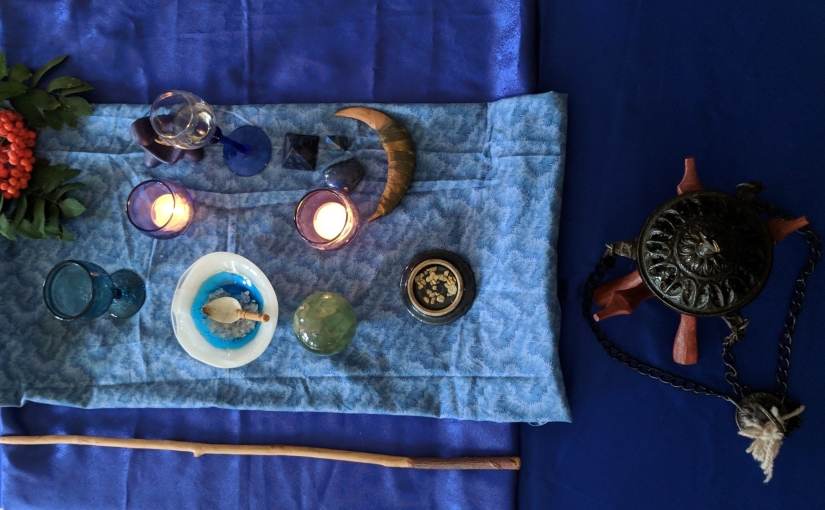
 My ritual sword, the Slender Leaf Blade, was handcrafted by the late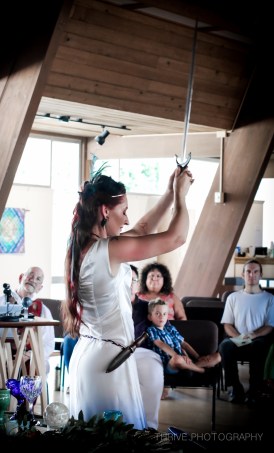
 myth.and.the.muse
You must be logged in to post a comment.